编号:CDUT-2023-68
标题:Tracing erosion patterns in South Tibet: Balancing sediment supply to the Yarlung Tsangpo from the Himalaya versus Lhasa Block
入藏号:WOS:000715279200001
中国科学院文献情报中心期刊分区: 地球科学1区/TOP(2022)
本校作者:梁文栋
来源出版物:BASIN RESEARCH 卷: 34 期: 1 页: 411-439
出版年:2022
第一地址:成都理工大学
关键词:anthropic influence;erosion rate;geochemical compositions;Himalayan collision orogen;Lhasa Block;provenance analysis;sand petrography and heavy minerals;sediment mixing and storage
代表图:
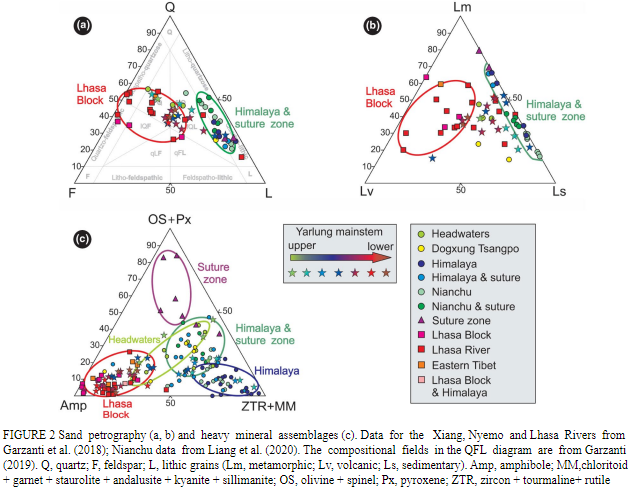
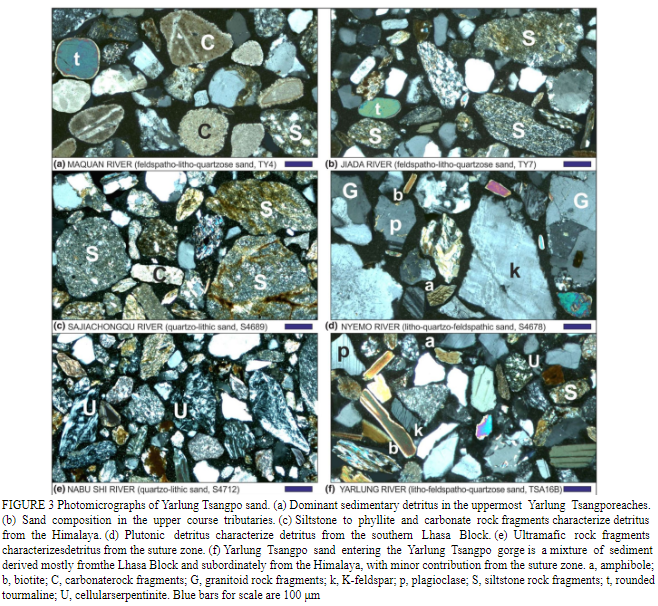
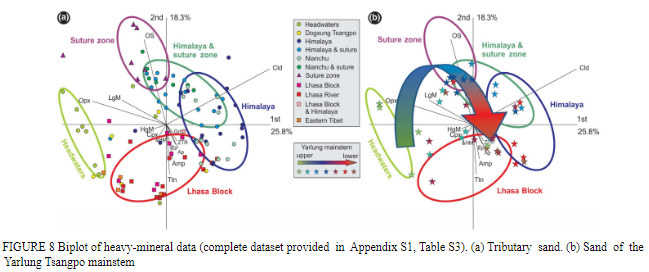
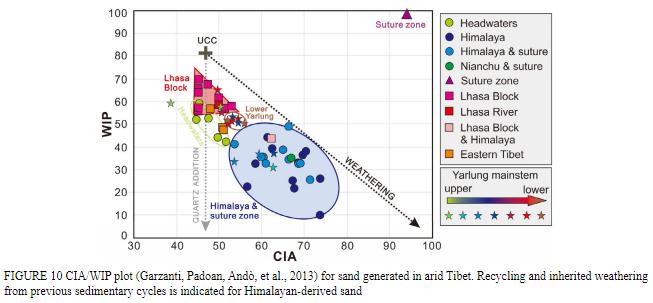
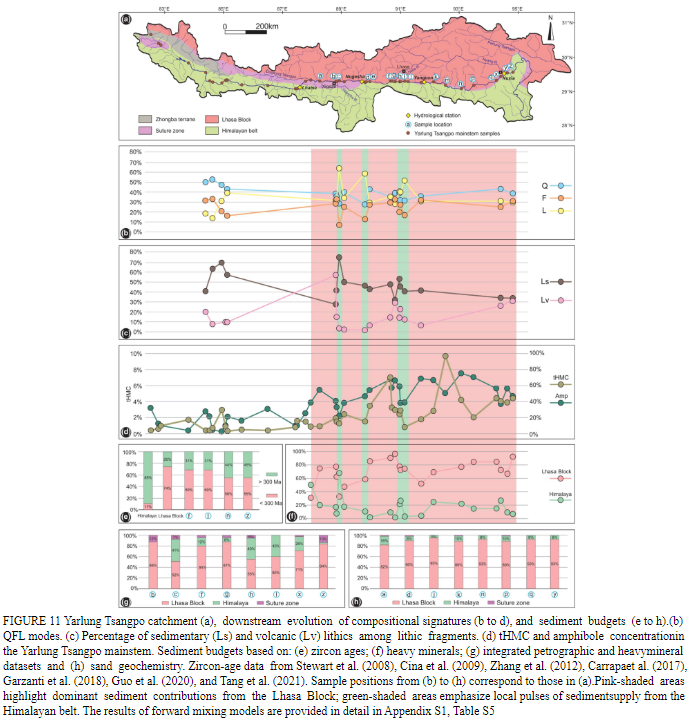
摘要:The Yarlung Tsangpo, draining the Himalayan-Tibetan orogen along the Indus-Yarlung suture zone, receives detritus from the deformed remnants of both Indian margin to the south and Asian margin to the north. High resolution petrographic, heavy-mineral and geochemical datasets, combined with published geochronological data, allow us to monitor compositional changes, estimate erosion rates and investigate lithologic, climatic and anthropic controls on sediment fluxes along this large sediment-routing system entirely developed within high mountain areas. Sediment generated from the Lhasa Block along the southern margin of Asia is characterized by abundant feldspar and volcanic rock fragments, amphibole-dominated transparent heavy mineral suite and high concentrations of K, Rb, Be, Th and Pb. Himalayan-derived sand, instead, is characterized by sedimentary to low-rank metasedimentary rock fragments, poor transparent heavy mineral suite dominated by durable recycled (zircon, tourmaline) or metamorphic minerals (chloritoid, garnet) and high Ca concentration. Sand from the ophiolitic suture is distinguished by serpentinite grains and mafic volcanic or metavolcanic detritus, transparent heavy mineral suite including olivine, Cr-spinel, enstatite and clinopyroxene, and high Mg, Cr, Ni and low rare earth elements. Himalayan detritus is prominent in Yarlung Tsangpo upper reaches, whereas detritus from the Lhasa Block becomes progressively predominant in the middle and lower reaches. Provenance budgets based on integrated petrographic, heavy-mineral and geochemical datasets indicate that ca. 83% of the detritus is supplied by the Lhasa Block and the rest mostly from the Himalaya (ca. 12%) and subordinately from the ophiolitic suture (5%). A low average erosion rate of ca. 0.06 mm/a was estimated for the Yarlung Tsangpo catchment upstream of the Namche Barwa syntaxis, which resulted from dry climate, relatively mild average relief and sediment storage in wide valley tracts of the middle and lower reaches. The decrease in sediment flux recorded in recent decades is mainly ascribed to growing human activities, which are becoming a prominent control on sediment generation and transportation even in the high-mountain area of South Tibet.
文章链接地址: https://onlinelibrary.wiley.com/doi/10.1111/bre.12625





 校内登录
校内登录