编号:CDUT-2023-10
标题:Serpentinite as a tracer for tectonic setting and mantle metasomatism of ophiolites: A case study of the Aoyougou ophiolite in the Qilian Orogenic Belt, NW China
入藏号:WOS:000752799600001
中国科学院文献情报中心期刊分区:地球科学1区/TOP(2022)
本校作者:赵静
来源出版物:GONDWANA RESEARCH 卷: 105 页: 1-11
出版年:2022
第一地址: 成都理工大学
关键词:Qilian Orogenic Belt;Re-Os isotopes;Serpentinite;Mantle metasomatism;Intra-oceanic subduction
代表图:
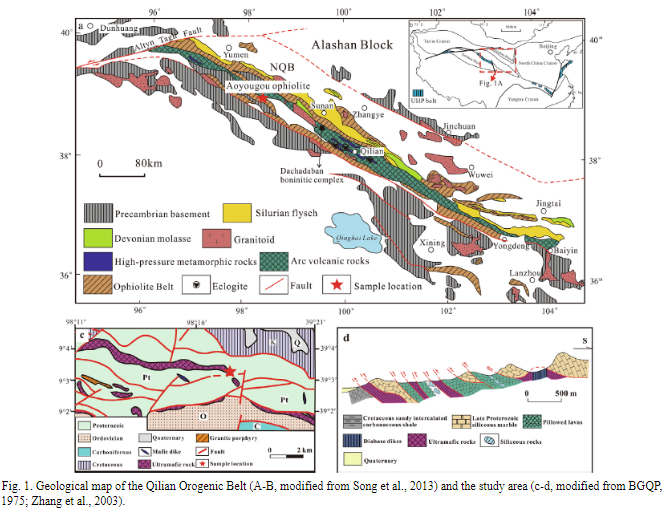
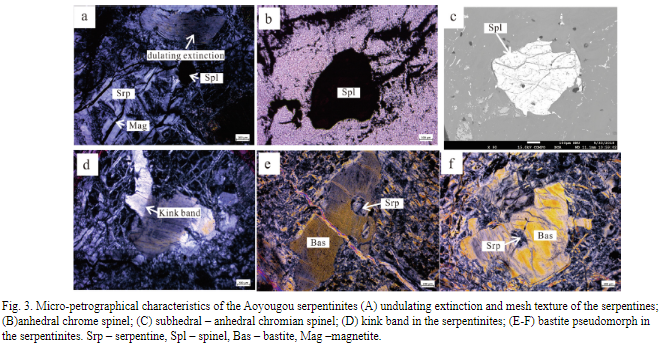
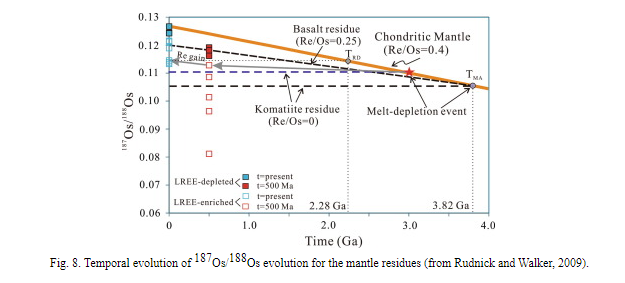
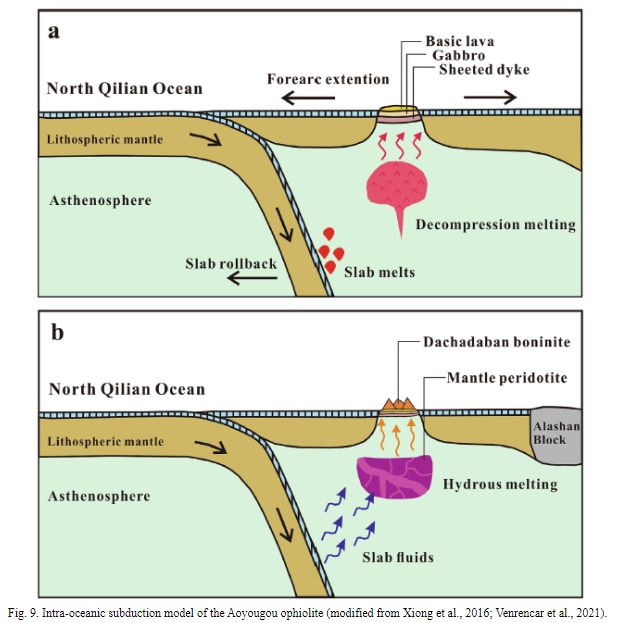
摘要:Serpentinites, particularly those transformed from mantle peridotites, are potential tracers for the petrogenesis and tectonic geodynamics of peridotitic protoliths and certain mantle processes (e.g., fluid/melt metasomatism). This study presents new petrographic observations, mineral chemistry, geochemistry, and Re-Os isotopic compositions of the serpentinites from the Aoyougou ophiolite, the most problematic ophiolite in the Qilian Orogenic Belt, NW China. Our data indicates that the protoliths are melting residuesof oceanic lithospheric mantle in a forearc setting. The high Mg# values (90.49–93.06) of serpentinites confirm their refractory nature, which reflects multiple episodes of partial melting and meltextraction (13.86–18.90%). Moreover, the geochemical fingerprints (e.g., U-shaped rare earth element chondrite-normalized patterns, enrichments of fluid-mobile elements, positive Eu anomalies, extremely high 187Re/188Os ratios, high Re abundances) and the ‘‘future” model ages (TMA) of most of the serpentinites show that they had undergone intensive melt/fluid metasomatism. Metasomatism was probably triggered by the input of slab-derived melts/fluids in the forearc setting, which resulted in the introduction of a high abundance of Re. Moreover, the Re-Os isotopic ages record a two-stage evolutionary history of mantle residues that included Precambrian melt extraction and late-Cambrian Re input by mantlemetasomatism. Combined with the geological context, an intra-oceanic subduction model was proposedto interpret the origin and evolution of the ophiolite. As a result of the intra-oceanic subduction of the North Qilian Ocean, the oceanic crust of the ophiolite was generated by decompressive melting of thepreviously depleted forearc mantle.
文章链接地址: https://www.sciencedirect.com/science/article/pii/S1342937X21003567





 校内登录
校内登录